History
History at St. Benedict's C oF E VA Junior School
Intent
At St Benedict’s C of E VA Junior School it is our aim to inspire a love of History in all our children. We aim to provide a History curriculum with subject knowledge, skills and understanding as set out in the National Curriculum Programme of study. The History curriculum at St Benedict’s draws from and makes full use of the immediate and wider local area, enabling children to develop a deep understanding of the rich history of their locality. As part of our school vision for our pupils to appreciate 'Life in all its Fullness' (John 10:10), our children are taught about various historical events, where they take place within a historical timeline and famous historical figures, some of which have shaped the world today.
Implementation
As a school, we maintain strong links to the National Curriculum guidelines to ensure all aspects, knowledge and skills of History are being taught across all year groups. We use progression grids providing clear skills, knowledge and vocabulary throughout the school.
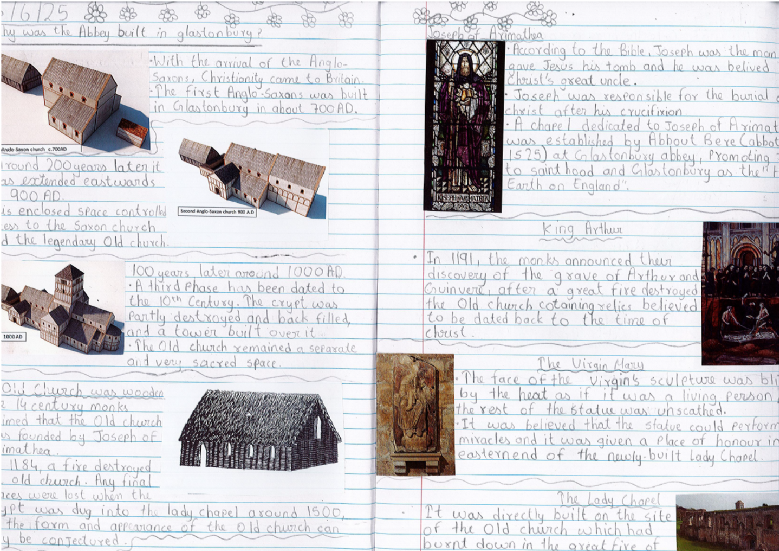
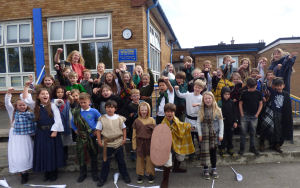
Our History topics enhance the wider curriculum and where appropriate we use historical artefacts, visitors, workshops and visits to excite and intrigue our children to find out more about events and people from the past.. The children make regular visits to local sites of historical interest and work with local historical groups such as The Red Brick Building, The Glastonbury Lake Village museum, Glastonbury Abbey, Avalon Archaeology and The Rural Life Museum to study local history as well as nearby venues. We aim to give our children as much understanding as possible about what it was like to be around at a particular period in history by having practical and realistic lessons where possible such as Celt Days where the children spend the day experiencing life as an Iron Age person in Britain. Before a new topic commences, each child reviews the time line within their books to gain an understanding of chronology and places their previous learning in British History alongside World History before placing their new topic on that timeline. Teachers refer to key conceptual themes to enable children to connect knowledge and reflect on commonalties and differences between societies across all year groups, Children in Upper School undertake a local history project as well as covering a thematic project on Crime and Punishment in Britain.
Impact
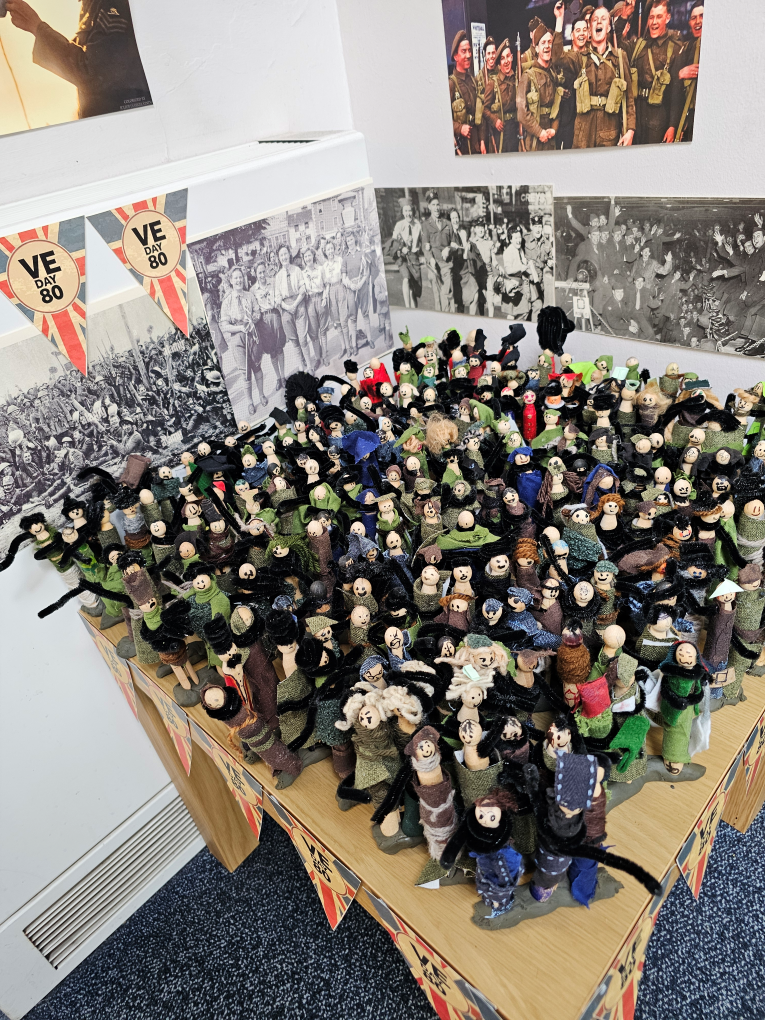
Through ‘pupil voice’ children will be able to talk about the skills and knowledge they have acquired throughout their time at St Benedict’s. There is clear evidence that our children have shown progress and attainment in line with the National Curriculum. Children demonstrate enthusiasm for the subject and can talk with confidence about history and demonstrate an understanding of a range of historical vocabulary which can be applied confidently. As historians, our children can use their skills to pose questions, evaluate evidence and draw conclusions. The school environment will be history rich through displays and resources.
We were awarded the Heritage Schools Award from Historic England in 2025.
Our assessor commented,
"The whole history curriculum is very carefully thought through and incredibly engaging and imaginative – I love the enquiry based on images/portraits through time, but it is always rooted in the story of Somerset and the rich history of Glastonbury."
“Their work shows how children really use historical enquiry skills across KS2 and engage with primary sources in an age appropriate way. I also appreciate how you use historical starting points to promote cross-curricular work, such as the Anglo Saxon bracelet designs and the map work in Year 6.”